



Introduction
When it comes to sports games on mobile, few titles have achieved the longevity and worldwide popularity of 8 Ball Pool. Developed and published by Miniclip, the game first appeared in 2010 as a browser-based experience before making a successful transition to Android and iOS. Since then, it has grown into the most recognizable digital pool game on mobile devices, attracting hundreds of millions of players and maintaining an active online community more than a decade after its release.
The formula is refreshingly straightforward. Players compete in real-time pool matches against opponents from around the world, following the familiar rules of eight-ball billiards. While the concept itself is simple, the game’s competitive ranking system, collectible cues, tournaments, and progression mechanics provide enough depth to keep players invested for months—or even years.
Regular updates have played a significant role in its continued success. Seasonal events, limited-time competitions, cosmetic rewards, and new cue collections ensure that long-time players always have fresh objectives beyond simply winning matches. Combined with fast matchmaking and cross-platform accessibility, 8 Ball Pool has established itself as the benchmark for mobile billiards games.
Its appeal extends well beyond traditional sports game enthusiasts. Whether you’re looking for a quick five-minute match during a break or a competitive climb through higher-stakes tables, the game offers an experience that is easy to pick up yet surprisingly difficult to master.
Gameplay Mechanics and Controls
At its core, 8 Ball Pool faithfully recreates the rules of traditional eight-ball billiards. Players take turns pocketing either solid or striped balls before attempting to sink the black eight ball legally to secure victory. Although the objective is familiar, the game adds a competitive progression system that keeps every match meaningful.
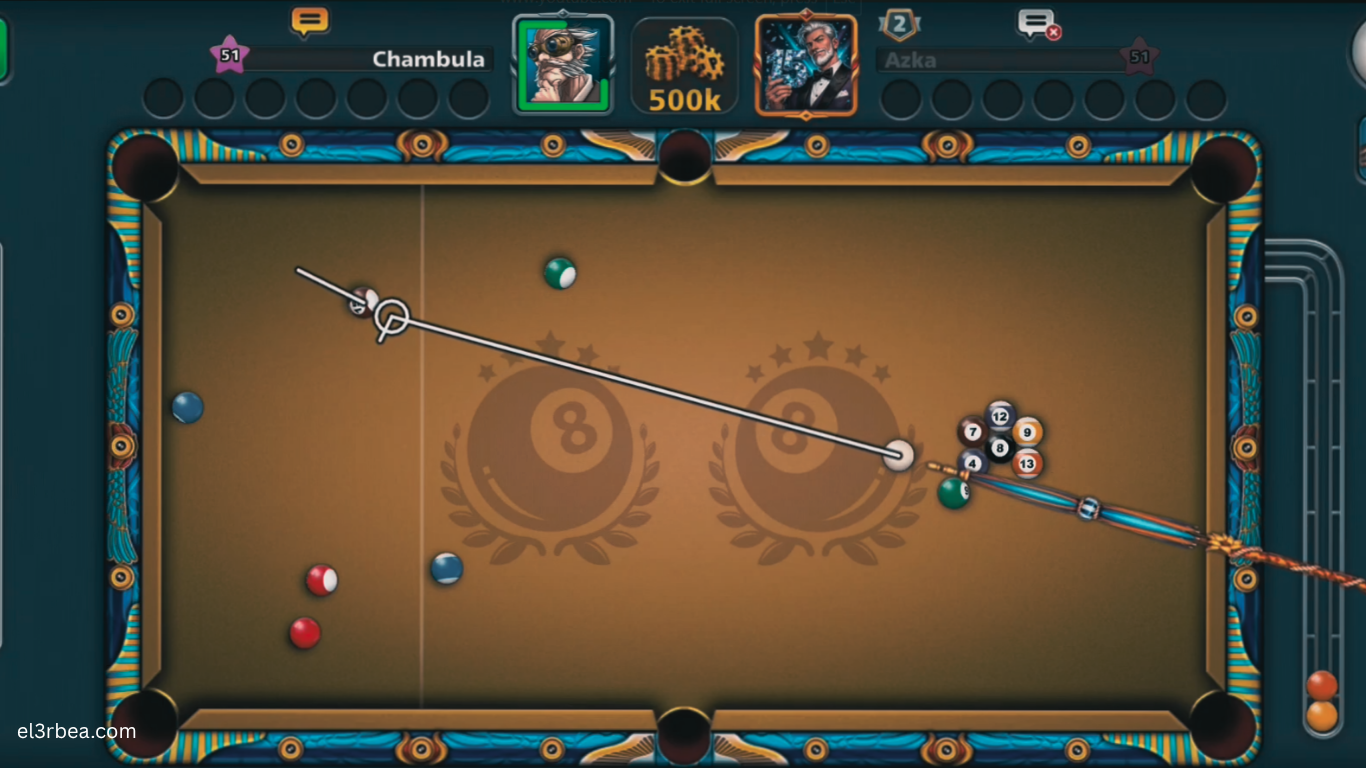
The controls are one of the game’s greatest strengths. A simple drag mechanic allows players to rotate the cue around the cue ball with exceptional precision. Shot power is adjusted by pulling back on the cue, while optional spin controls allow experienced players to manipulate the cue ball after contact for advanced positioning.
This control scheme feels remarkably natural on touchscreens. Even newcomers quickly understand the basics, while advanced techniques such as bank shots, combination shots, cue ball spin, and safety play introduce a satisfying skill ceiling for competitive players.
Physics simulation deserves particular praise. Ball movement feels believable, collisions are consistent, and shot outcomes generally reward precision rather than luck. Learning angles, rebound trajectories, and spin mechanics gradually becomes second nature, making improvement feel earned rather than random.
Progression revolves around earning coins through victories, unlocking higher-entry tables, collecting stronger cues, and increasing player level. As the stakes rise, so does the quality of competition. Higher-level opponents often display excellent cue ball control, forcing players to think several shots ahead instead of simply aiming for the next available pocket.
Several game modes expand the experience beyond standard one-on-one matches. Tournament events, quick-play tables, nine-ball matches, special seasonal competitions, and club activities provide welcome variety without changing the core gameplay that fans enjoy.
The learning curve is exceptionally balanced. Casual players can enjoy competitive matches almost immediately, while dedicated players continue discovering advanced positioning strategies and tactical decision-making after hundreds of games. Success depends not only on accurate shooting but also on planning future shots and limiting opportunities for opponents.
Network matchmaking is generally fast, allowing players to enter new matches within seconds. This quick turnaround makes the game particularly well suited to short mobile gaming sessions.
Graphics, Sound, and Performance
Visually, 8 Ball Pool favors clarity over unnecessary complexity. Rather than pursuing photorealistic graphics, Miniclip focuses on clean table designs, readable interfaces, and smooth animations that keep attention centered on gameplay.
Pool tables feature attractive lighting and polished surfaces, while cues, balls, and environmental details are rendered with enough realism to create an authentic atmosphere without overwhelming mobile hardware. Cosmetic cue designs range from traditional wooden models to elaborate animated collectibles, offering players plenty of personalization options.
Animations are fluid throughout each match. Ball collisions, pocket physics, cue movement, and victory celebrations all appear polished, reinforcing the game’s premium feel despite its free-to-play structure.
The audio presentation remains understated yet effective. Crisp sound effects accompany cue strikes, ball impacts, and successful pocket shots, providing satisfying feedback after every play. Background music stays subtle, allowing players to focus on strategy without distraction.
Performance is consistently excellent across a broad range of devices. High-end smartphones deliver stable frame rates, sharp visuals, and extremely responsive touch input, making precise aiming feel effortless.
Older and budget devices also perform admirably thanks to the game’s modest hardware requirements. Loading times remain brief, battery consumption is relatively low, and technical issues are uncommon. This broad accessibility has undoubtedly contributed to the game’s enduring popularity.
Online stability is another strong point. Matchmaking is quick, disconnections are relatively rare under stable internet connections, and servers generally provide smooth multiplayer experiences across different regions.
In-App Purchases and Monetization
Like many successful mobile games, 8 Ball Pool follows a free-to-play model supported by optional in-app purchases. Players can buy Pool Cash, premium cues, cosmetic items, coin bundles, and special promotional packages.
The game’s economy revolves primarily around coins, which serve as entry fees for competitive matches. Winning increases your balance, while losing reduces it, adding genuine tension to higher-stakes games.
Premium cues deserve careful consideration. Many offer useful bonuses such as improved aim assistance, greater force, or lower recharge costs. While these upgrades provide certain conveniences, they do not replace player skill. A precise, experienced player using a standard cue can consistently defeat less skilled opponents equipped with premium gear.
Free players have multiple opportunities to earn coins through daily rewards, missions, seasonal events, advertisements, and tournament participation. Progress may be slower without purchases, but meaningful advancement remains entirely possible.
The primary frustration comes from the risk-based economy. Consecutive losses can quickly drain coin reserves, temporarily limiting access to higher-tier tables unless players rebuild their balance or purchase additional currency. Fortunately, lower-entry tables always remain available for recovery.
Overall, 8 Ball Pool is best described as pay-to-progress rather than pay-to-win. Spending money accelerates progression and expands customization options, but victory ultimately depends on shot accuracy, positioning, and strategic planning.
Final Verdict and Rating
8 Ball Pool continues to set the standard for digital billiards on mobile. Its realistic physics, intuitive controls, polished multiplayer systems, and years of ongoing developer support have created a remarkably complete sports experience that remains just as enjoyable today as it was at launch.
The game’s greatest strength lies in its balance between accessibility and mastery. Beginners can enjoy competitive matches almost immediately, while experienced players constantly refine advanced techniques involving cue ball control, defensive positioning, and shot planning.
Although monetization encourages progression through optional purchases, the outcome of most matches still depends on player ability rather than financial investment. That emphasis on skill has helped maintain an active competitive community for well over a decade.
8 Ball Pool is ideal for sports game enthusiasts, competitive players, casual gamers seeking short sessions, and anyone interested in learning the fundamentals of billiards through an engaging digital format.
Pros
- Outstanding physics engine with highly accurate and satisfying gameplay.
- Responsive touch controls that feel natural on mobile devices.
- Fast online matchmaking supported by years of regular content updates.
Cons
- Coin-based progression can punish losing streaks.
- Premium cues offer progression advantages, even if they don’t guarantee victories.
- Long-term progression eventually becomes focused more on collecting cosmetics than introducing new gameplay mechanics.
Final Rating: 9.3/10
More than a decade after its mobile debut, 8 Ball Pool remains the definitive billiards experience on smartphones. Its polished mechanics, competitive multiplayer, and accessible design continue to make it one of the finest sports games available on Android and iOS, earning a well-deserved place among the all-time greats of mobile gaming.