




Introduction
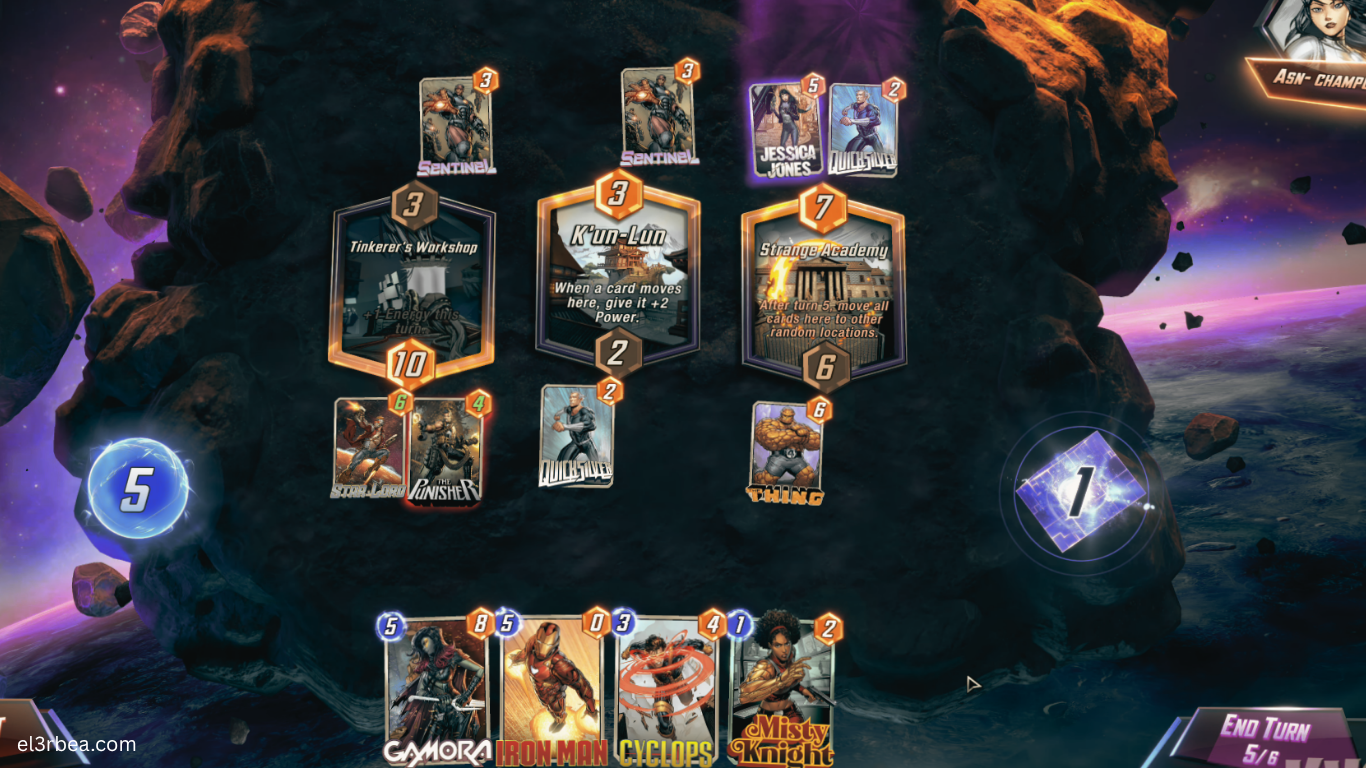
Marvel Snap, developed by Second Dinner and published by Nuverse (with ongoing publishing changes in some regions), has redefined what a mobile collectible card game can be. Instead of lengthy battles that demand twenty or thirty minutes of uninterrupted attention, Marvel Snap delivers fast-paced six-turn matches that emphasize strategic planning, prediction, and risk management. Every decision matters because there is very little time to recover from mistakes.
At its core, Marvel Snap challenges players to control at least two of three locations by accumulating more Power than their opponent. While the objective sounds straightforward, each match introduces randomly selected locations with unique effects that can completely alter your strategy. Add in hundreds of Marvel characters, diverse deck archetypes, and the innovative Snap and Retreat mechanics, and the game becomes far deeper than it initially appears.
Unlike many digital card games, success in Marvel Snap is not determined solely by collecting rare cards. Understanding tempo, sequencing, energy management, and opponent behavior often has a greater impact than simply owning the newest Series 5 card. Experienced players consistently outperform less experienced opponents because they recognize favorable situations, retreat from unwinnable games, and maximize Cube gains over time.
Whether you’re climbing the ranked ladder or refining competitive decks for Conquest Mode, mastering the game’s core mechanics will significantly improve your consistency and overall win rate.
Golden Rules for Beginners
Learn the Value of Every Energy Point
Energy increases by one each turn, reaching six Energy on the final turn.
One of the biggest beginner mistakes is leaving Energy unspent without a strategic reason.
Whenever possible:
- Play cards that efficiently use your available Energy.
- Plan future turns instead of focusing only on the current move.
- Avoid overcrowding locations too early.
Efficient Energy usage creates consistent pressure throughout the match.
Build Around One Deck Strategy
New players often combine individually strong cards that lack synergy.
Instead, choose a clear archetype such as:
- Ongoing
- On Reveal
- Destroy
- Move
- Discard
- Zoo
- Ramp
Every card should contribute toward your primary game plan.
A focused deck almost always performs better than a collection of powerful but unrelated cards.
Read Every Location Carefully
Locations define every match.
Before making your first play:
- Read all revealed location effects.
- Consider how future locations may change your strategy.
- Avoid committing important cards before understanding the battlefield.
Winning Marvel Snap often depends more on adapting to locations than defeating opposing cards directly.
Understand When to Retreat
Retreating is not failure.
It is one of the game’s strongest strategic tools.
If:
- Your key combo is disrupted.
- Important locations favor your opponent.
- You recognize an unwinnable position.
Retreating early protects valuable Cubes and improves your long-term ranking progress.
Upgrade Cards Consistently
Visual upgrades increase your Collection Level, which unlocks:
- New cards
- Credits
- Collector’s Reserves
- Additional progression rewards
Even cards you don’t regularly play contribute to account progression when upgraded.
Advanced Tactical Mechanics
Master Priority
Priority determines which player’s cards reveal first each turn.
The player currently leading the game reveals first.
This mechanic dramatically affects interactions involving:
- Shang-Chi
- Cosmo
- Armor
- Enchantress
- Shadow King
Understanding reveal order allows experienced players to counter opponents more effectively and avoid unnecessary risks.
Learn Cube Management
Marvel Snap’s ranking system revolves around Cubes rather than match victories alone.
Strong players ask two questions:
- Should I Snap?
- Should I Retreat?
Winning four Cubes consistently is often more valuable than occasionally winning eight while suffering frequent large losses.
Cube management separates average players from elite competitors.
Anticipate Opponent Archetypes
Recognizing common deck patterns provides a major advantage.
For example:
- Nova often suggests Destroy.
- Sunspot may indicate High Evolutionary or Energy Ramp.
- Human Torch frequently signals Move.
- Morbius commonly supports Discard.
Identifying an archetype early allows you to predict future plays several turns in advance.
Manage Board Space
Each location holds only four cards.
Running out of available slots can prevent important combos during later turns.
Always leave enough space for:
- Combo pieces
- Movement effects
- Token generation
- Late-game finishers
Board management becomes increasingly important during competitive play.
Sequence Cards Correctly
Order matters.
For example:
- Buff cards should often appear before scaling effects.
- Destroy targets must exist before destruction effects activate.
- On Reveal interactions depend entirely on sequencing.
Correct ordering frequently determines whether a combo succeeds or fails.
Common Pitfalls to Avoid
Playing Every Turn Automatically
Sometimes passing is the strongest move.
Holding a combo piece until the final turn can conceal your strategy and prevent opponents from reacting effectively.
Don’t confuse constant activity with optimal play.
Overcommitting to One Location
Winning a single location by thirty Power provides no additional benefit over winning it by one.
Spread your resources efficiently.
Maintaining pressure across multiple lanes gives you far more tactical flexibility.
Ignoring Opponent Information
Every revealed card provides clues.
Pay attention to:
- Cards already played.
- Remaining Energy.
- Available board space.
- Unrevealed locations.
- Potential counter cards.
Successful prediction becomes easier with experience.
Snapping Too Late
Many beginners Snap only after their victory becomes obvious.
Experienced opponents simply Retreat.
Snap when you recognize a favorable position before your advantage becomes visible.
Earlier Snaps maximize Cube gains over time.
Chasing Every New Card
Marvel Snap regularly introduces new cards, but owning every release is unnecessary.
Instead:
- Build complete competitive decks.
- Strengthen existing archetypes.
- Spend resources strategically.
Deck familiarity often outweighs constant collection expansion.
Conclusion
Marvel Snap succeeds because it combines accessible rules with remarkable strategic depth. Six-turn matches may seem brief, but every decision—from managing Energy and sequencing cards to reading locations and predicting your opponent’s next move—can determine the outcome. Players who consistently think several turns ahead will find themselves climbing the ranked ladder far more efficiently than those who simply play the strongest cards available.
One of the game’s most unique strengths is its Cube system, which rewards intelligent risk management as much as winning matches. Knowing when to Snap confidently and when to Retreat without hesitation is just as important as building an optimized deck. Over time, disciplined Cube management becomes one of the biggest factors separating experienced competitors from casual players.
Long-term success also depends on understanding deck synergy rather than chasing individual powerful cards. A cohesive archetype built around a clear strategy will almost always outperform a collection of unrelated high-value cards. As your Collection Level grows and new cards become available, continue refining your favorite decks instead of constantly switching strategies.
Finally, remember that adaptation is at the heart of every match. Random locations, evolving metas, and unpredictable opponents ensure that no two games play out exactly the same way. Embrace that flexibility, study your losses as carefully as your victories, and continue improving your decision-making. Master these core principles, and you’ll not only win more matches but also enjoy the strategic depth that makes Marvel Snap one of the most compelling digital card games on mobile.