


Introduction
Few mobile games have achieved the cultural impact of Candy Crush Saga. Developed by King and released in 2012, this colorful match-three puzzle game quickly evolved from a casual pastime into one of the most recognizable names in mobile entertainment. Its simple concept, addictive progression, and regular content updates have helped it remain relevant for well over a decade, even as thousands of competing puzzle games have entered the market.
The premise is instantly approachable. Players swap neighboring candies to create matches of three or more identical pieces, clearing objectives before running out of moves. While that may sound straightforward, Candy Crush Saga gradually introduces new mechanics, blockers, and level goals that keep the experience engaging long after the opening stages.
Today, the game boasts thousands of handcrafted levels, seasonal events, competitive leaderboards, and social features that encourage friendly competition with family and friends. Frequent updates ensure there is always another challenge waiting, making Candy Crush Saga one of the longest-supported mobile games available.
Its success has influenced an entire generation of puzzle titles, with countless developers borrowing elements from its progression system and reward structure. Despite that competition, Candy Crush Saga remains one of the genre’s strongest representatives thanks to its polished design, accessible gameplay, and carefully balanced difficulty curve.
Gameplay Mechanics and Controls
At its foundation, Candy Crush Saga follows the classic match-three formula. Players slide candies horizontally or vertically to create rows or columns of at least three matching pieces. Successful matches clear the board, trigger chain reactions, and contribute toward each level’s unique objective.
Although the opening levels are intentionally forgiving, the game steadily expands its mechanical depth. New obstacles such as chocolate, jelly, frosting, licorice, and locked candies force players to think several moves ahead rather than relying on random matches. Later stages often require careful planning, efficient resource management, and a bit of luck.
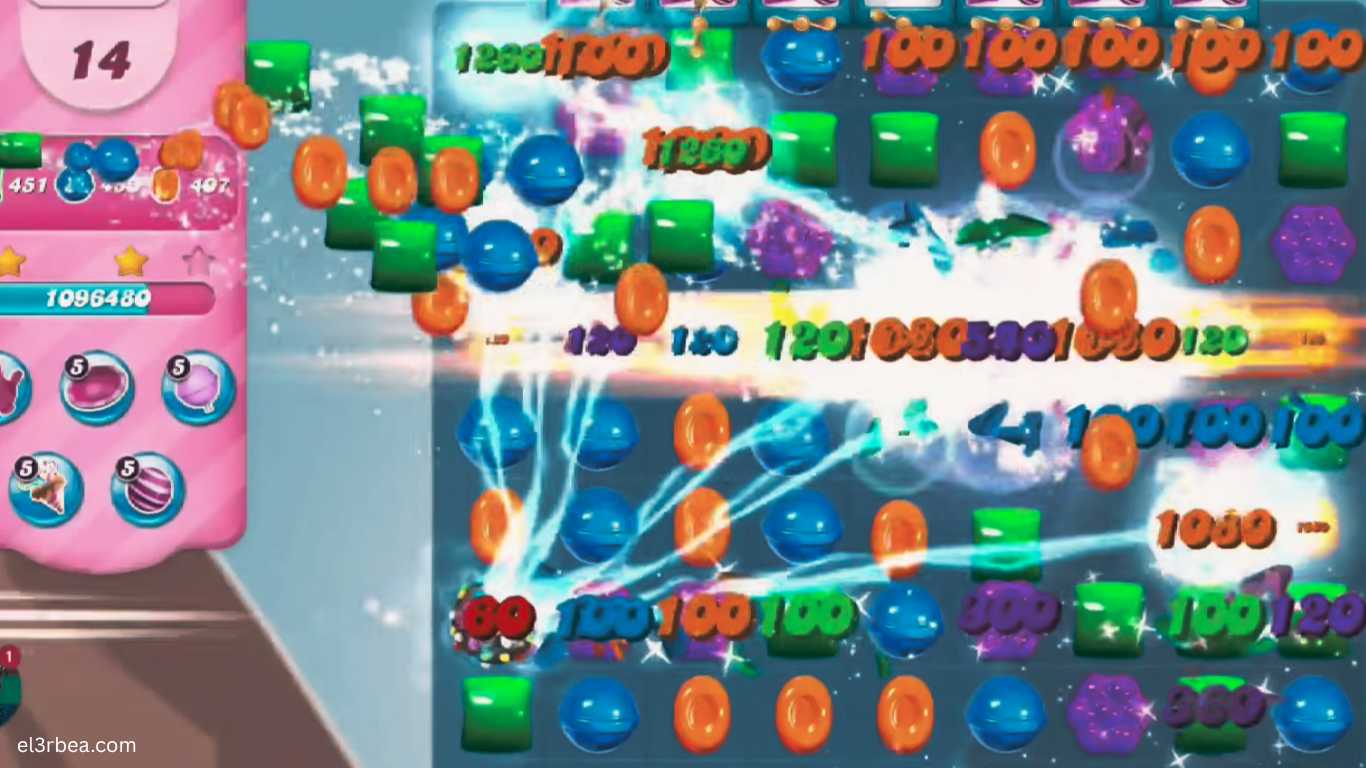
Special candies introduce another layer of strategy. Matching four candies creates striped candies capable of clearing entire rows or columns, while five-candy combinations generate powerful color bombs that eliminate every candy of a selected color. Combining two special candies often produces spectacular board-clearing effects capable of completely changing the outcome of a difficult level.
The touch controls are exceptionally responsive. Swapping candies feels immediate, animations are fluid, and accidental inputs are rare. Even during visually busy chain reactions, the game remains easy to follow thanks to clear visual feedback and intuitive interface design.
The learning curve deserves praise for welcoming new players without sacrificing long-term challenge. Early levels teach core mechanics naturally through gameplay rather than lengthy tutorials. As players progress, increasingly complex puzzles encourage experimentation and strategic thinking instead of simple pattern recognition.
Randomized candy placement also keeps individual attempts unpredictable. While planning remains essential, adapting to changing board layouts becomes equally important. This combination of strategy and chance creates satisfying moments where a single well-placed move triggers an impressive cascade of bonus matches.
Daily challenges, limited-time events, and seasonal competitions add variety beyond the main campaign. These activities reward active players with boosters, extra lives, and exclusive prizes, providing additional reasons to return even after completing hundreds of levels.
Graphics, Sound, and Performance
Candy Crush Saga embraces a cheerful visual style that perfectly matches its lighthearted atmosphere. Bright colors, oversized candies, and playful animations create an inviting presentation that remains visually appealing despite the game’s age.
Every level features polished effects that make successful combinations satisfying to watch. Exploding candies, sparkling cascades, and dramatic chain reactions provide rewarding visual feedback without overwhelming the screen. The game’s user interface is clean, making important information such as remaining moves and objectives easy to monitor throughout each puzzle.
Although environments remain largely decorative, subtle background changes and seasonal themes help prevent the presentation from becoming repetitive. Regular content updates introduce fresh artwork tied to holidays and special events, giving longtime players something new to appreciate.
The audio design complements the visuals effectively. Cheerful background music reinforces the game’s relaxed atmosphere, while satisfying sound effects accompany successful matches, booster activations, and level completion celebrations. The soundtrack is intentionally unobtrusive, allowing players to enjoy extended sessions without becoming fatigued.
Performance is consistently excellent across a wide range of devices. On flagship smartphones, animations remain smooth, menus load almost instantly, and transitions between levels are seamless.
Budget and older devices also handle the game remarkably well. Candy Crush Saga has been carefully optimized over years of development, resulting in stable frame rates and minimal loading times even on less powerful hardware. Battery consumption remains relatively low compared to graphically intensive mobile games, making it an ideal choice for quick gaming sessions throughout the day.
Technical issues are rare, and crashes are uncommon, reflecting the maturity and ongoing refinement of the game’s development.
In-App Purchases and Monetization
Candy Crush Saga follows a free-to-play model supported by optional in-app purchases. Players can download the game at no cost and access the complete campaign without making mandatory payments.
Purchasable items primarily include extra lives, boosters, additional moves, and gold bars used to accelerate progression. These items become particularly tempting during later levels, where puzzle difficulty increases noticeably.
Unlike competitive multiplayer games, Candy Crush Saga cannot accurately be described as “pay-to-win” because players compete primarily against the game’s puzzles rather than other users. Purchasing boosters certainly makes difficult stages easier, but it does not provide an unfair advantage over opponents.
Free players can still complete every level through patience, careful planning, and repeated attempts. Daily rewards, timed events, and challenge bonuses regularly distribute helpful resources, reducing the pressure to spend money.
The most controversial aspect of the monetization system remains the lives mechanic. Running out of lives temporarily limits continued play unless players wait for regeneration, receive lives from friends, or purchase additional attempts. While this system encourages moderation, it can occasionally interrupt momentum during particularly challenging sections.
Overall, Candy Crush Saga maintains a reasonably fair balance. Spending money speeds up progression and reduces frustration, yet dedicated free players can experience the full game without feeling permanently disadvantaged.
Final Verdict and Rating
Candy Crush Saga remains one of the finest examples of accessible mobile game design. Its combination of intuitive controls, carefully designed puzzles, polished presentation, and years of developer support has allowed it to maintain remarkable popularity long after many of its competitors have disappeared.
The gameplay succeeds because it respects players of every skill level. Beginners can enjoy quick puzzle sessions within minutes, while experienced players continue finding satisfaction in solving increasingly complex stages and mastering advanced combinations.
Although the game’s monetization occasionally encourages purchases during difficult levels, it never locks meaningful content behind a paywall. Persistence and thoughtful play remain the most valuable tools for long-term success.
Candy Crush Saga is best suited for casual players, puzzle enthusiasts, commuters looking for short gaming sessions, and anyone who enjoys relaxing yet mentally engaging gameplay.
Pros
- Highly polished puzzle mechanics with intuitive touch controls.
- Thousands of well-designed levels supported by regular content updates.
- Excellent optimization that performs smoothly on both high-end and budget devices.
Cons
- Difficulty spikes can occasionally feel frustrating.
- Lives system may interrupt extended play sessions.
- Late-game progression sometimes relies on repeated attempts and favorable board layouts.
Final Rating: 9.1/10
More than a decade after its debut, Candy Crush Saga continues to set the benchmark for match-three puzzle games on mobile. Its timeless gameplay, welcoming presentation, and impressive longevity make it an easy recommendation for anyone seeking a polished, rewarding, and endlessly replayable puzzle experience.